


Injection Moulding Troubleshooting: Beyond the Process Approach
Injection moulding may appear to involve three primary elements: the machine, the mould and the material. However, when a defect emerges, troubleshooting often reveals a much more complex interaction between process conditions, thermal behaviour, mechanical design, tooling and product geometry.
This case study examines the development of packaging for a small toothpaste format. The cap featured a bottom outer diameter of approximately 10 mm, a top outer diameter of approximately 8 mm and an injection point positioned 5 mm below the top. As the product was being developed for the first time, the concept was initially validated using a four-cavity pilot mould before the learnings were transferred to a 48-cavity commercial tool.
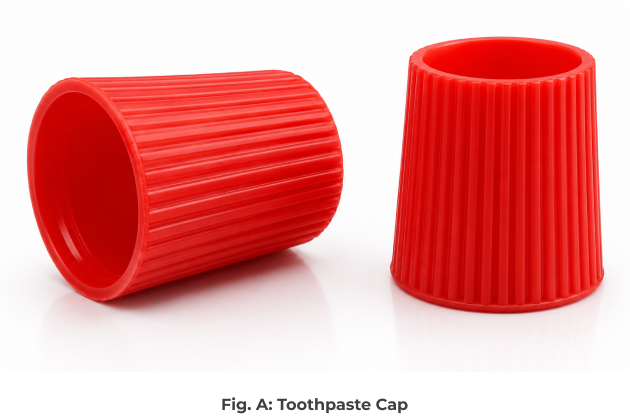
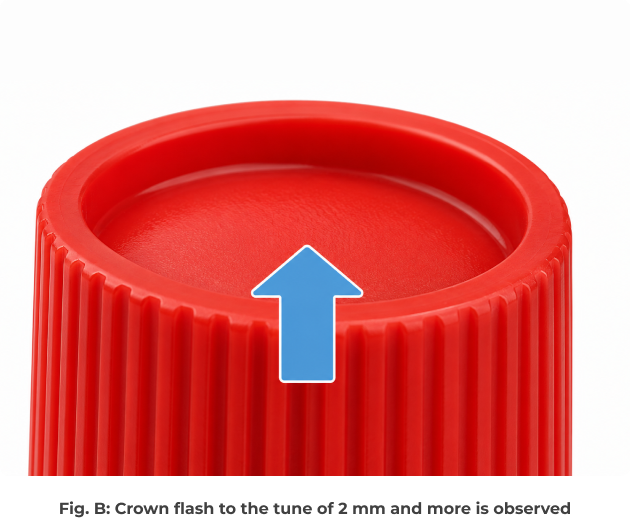
During commercial tool development, the team encountered a significant gate-crowning issue. The gating system was inspected and found to be within design tolerances. Lowering the tip temperature helped reduce the defect, but it also introduced short fills and sink marks. Increasing the hold time produced some improvement, but not enough to achieve an acceptable result. It also threatened the target cycle time of 8.1 seconds, which was essential for producing approximately 350,000 caps per day.
The investigation was therefore expanded beyond hot-runner settings and standard process parameters. The team identified opposing adhesion forces between the polypropylene material, the glossy cavity surface and the heated valve-pin tip during mould opening. Micro-blasting the cavity surface improved part release and significantly reduced crown flash without requiring changes to the established process parameters or cycle time.
The case highlights an important principle: effective injection moulding troubleshooting cannot rely on one proven approach alone. It requires analysing the complete system and understanding how multiple factors interact.
For the complete technical analysis, observations and solution, read it here: Injection Moulding – Troubleshooting: Beyond process approach and explore the problem-solving process behind the final successful outcome.